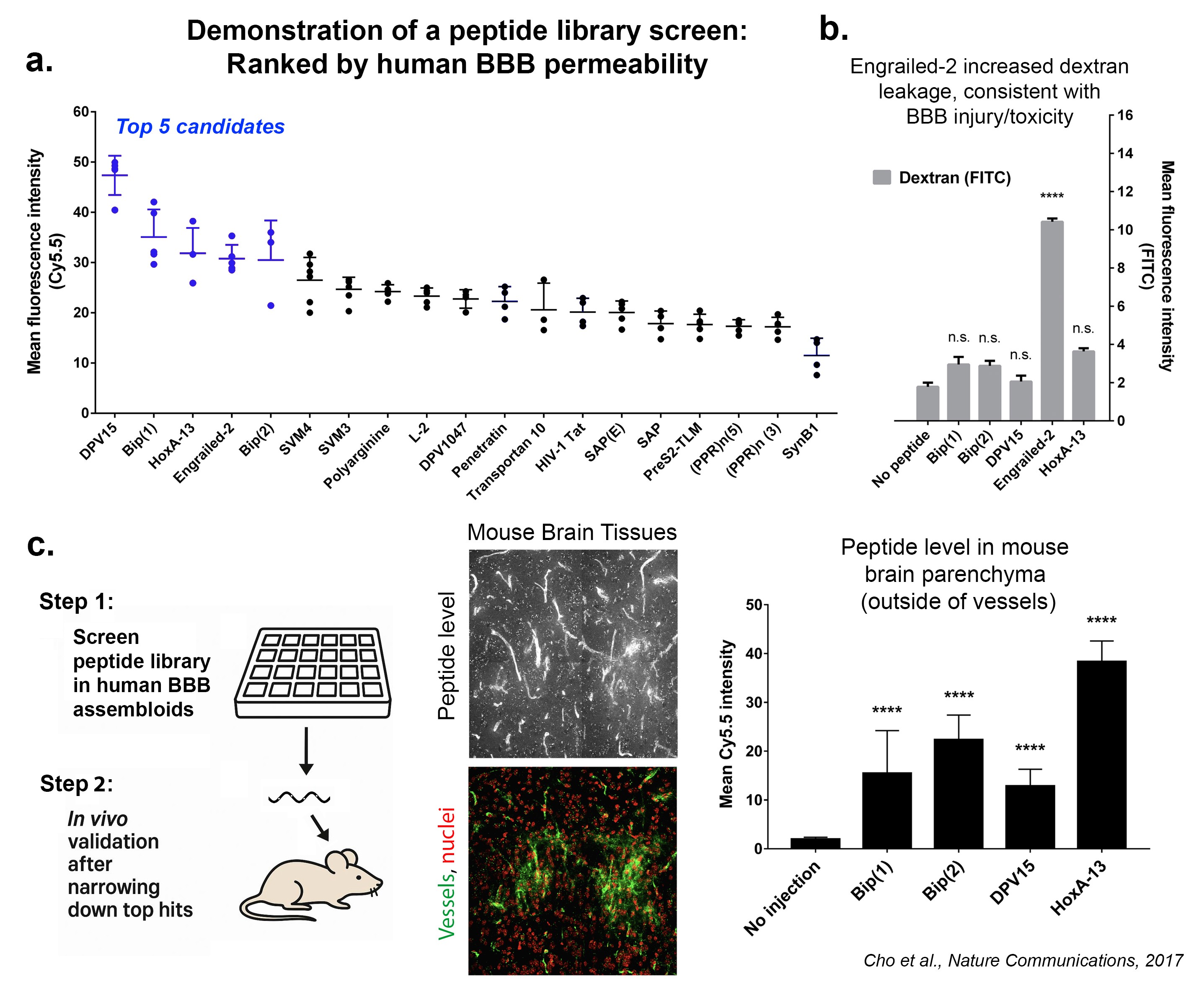
This comparison highlights a key limitation of traditional blood–brain barrier (BBB) transwell co-culture assays. Even after 40 hours, the transwell model fails to distinguish between a BBB-penetrant peptide (Angiopep-2) and non-penetrant controls, resulting in no meaningful separation between compounds.
In contrast, NeuroSkye’s BBB assembloids clearly differentiate penetrant and non-penetrant molecules within just three hours. The assembloid system captures selective transport across an intact barrier while remaining impermeable to dextran, demonstrating a more biologically relevant and responsive model of the human blood–brain barrier.

Human Assembloids Capture Key BBB Features
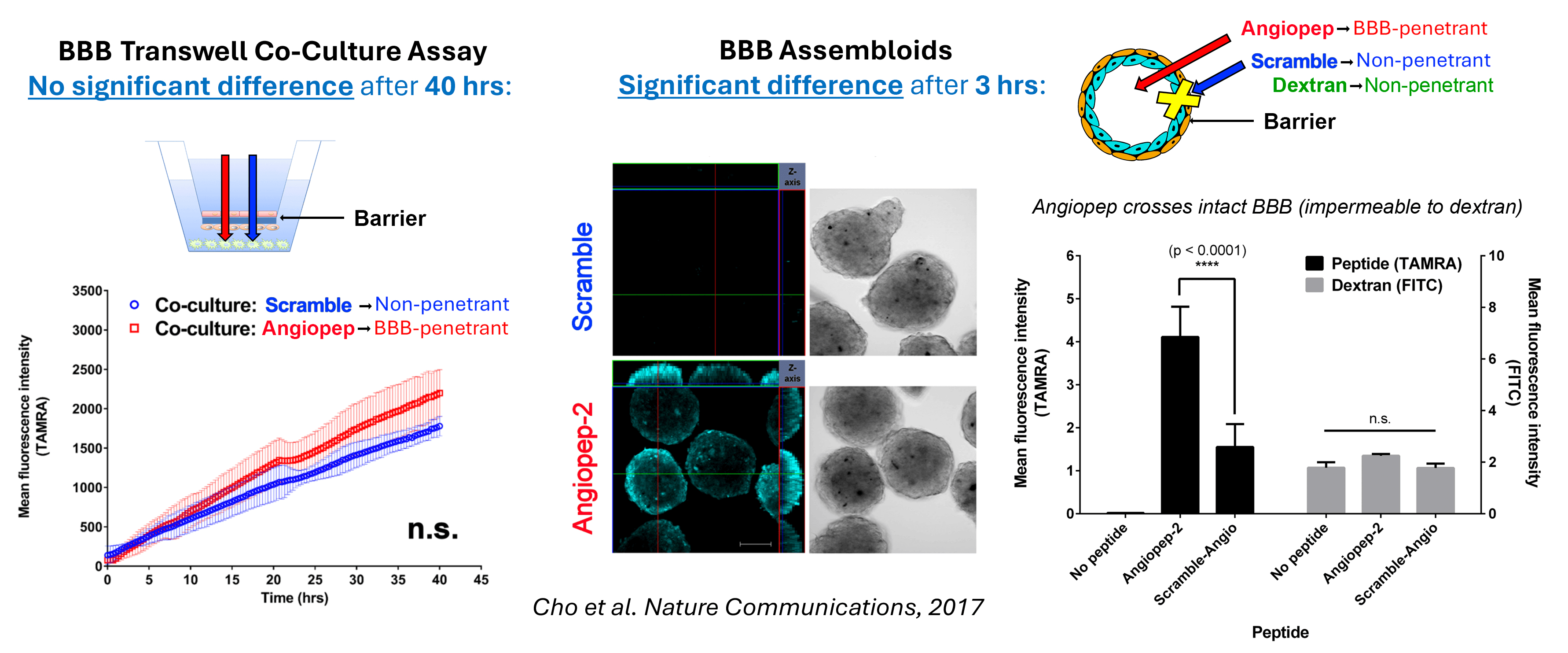
These results compare key BBB features in traditional transwell models versus NeuroSkye’s human BBB assembloids. In standard transwells, essential BBB components such as tight junctions (ZO-1), efflux transporters (P-gp), and adherens junctions (β-catenin) are weakly expressed or poorly organized.
In contrast, NeuroSkye’s BBB assembloids show strong, structured expression of these markers, forming a barrier that more closely resembles the human BBB. This improved organization supports more realistic drug transport, permeability, and efflux behavior, providing data that more accurately reflect what occurs in the human brain.
Functional Validation of P-gp Efflux at the Blood–Brain Barrier
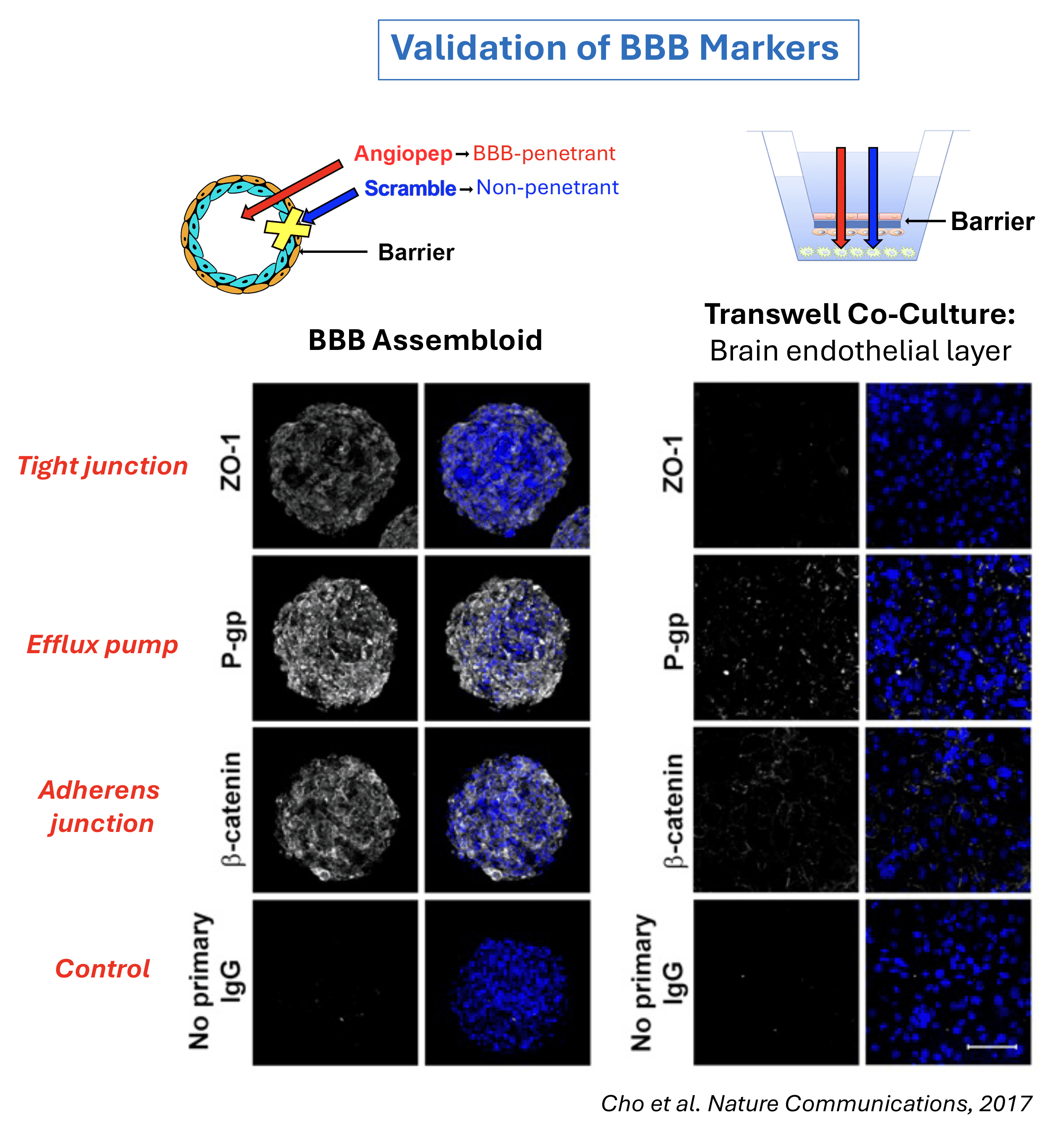
P-gp is a major gatekeeper at the BBB. This data validates P-gp expression and function using a fluorescent substrate (Rh123): signal increases when a P-gp inhibitor (LY335979) is added, consistent with blocked efflux. For CNS programs, this transporter can strongly influence brain exposure, efficacy, and safety; independent of plasma levels.
Human BBB-first discovery, with built-in safety and in vivo confirmation.
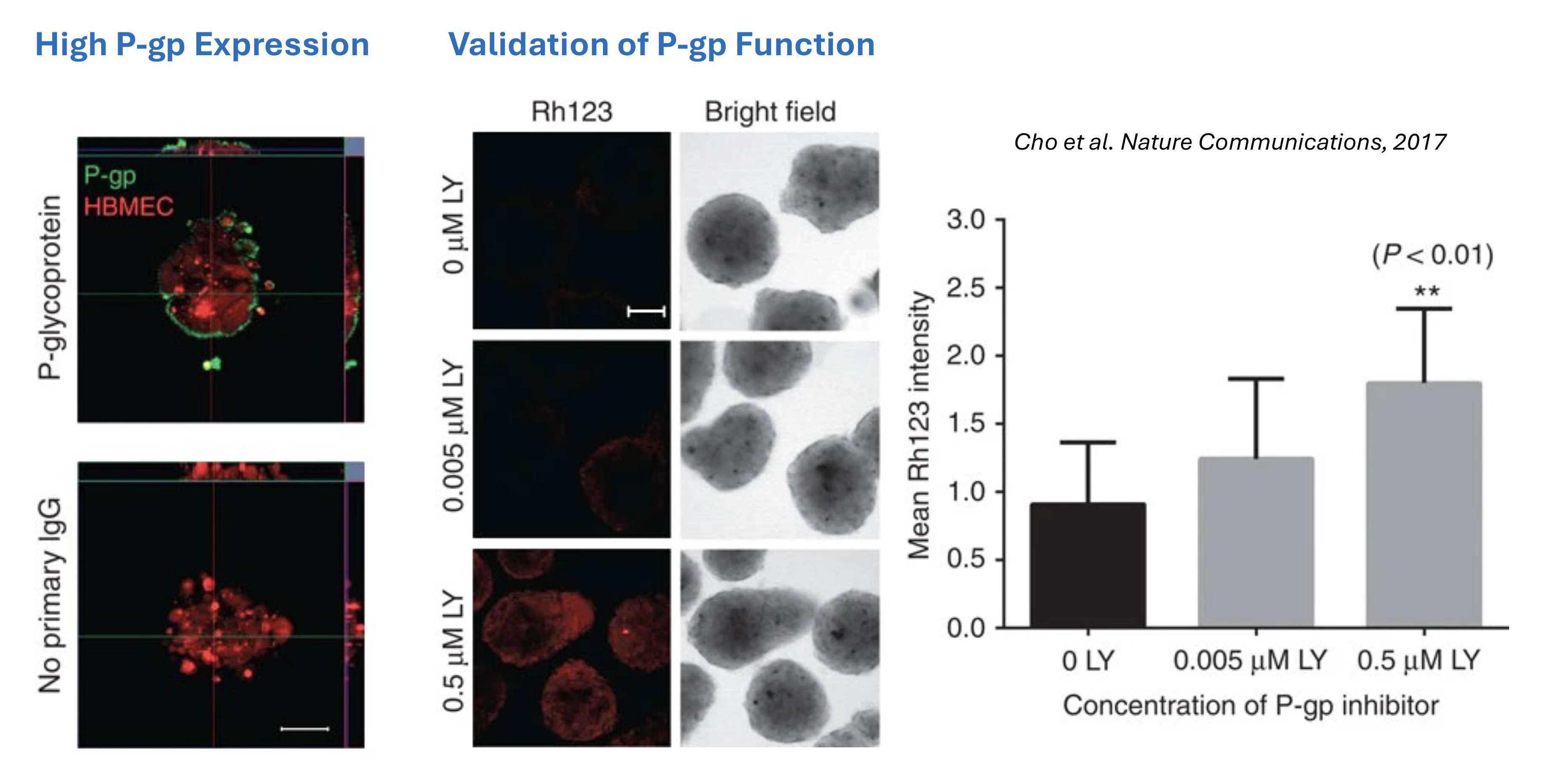
Utilizing a screening-to-validation workflow for BBB-penetrant peptides, we ran high-throughput library screens in human BBB assembloids to rank candidates by permeability, while simultaneously measuring barrier integrity to distinguish true transport from nonspecific “leakiness”. Compounds that increase dextran entry (e.g., Engrailed-2) are flagged as barrier-disruptive/toxic and thus deprioritized. The highest-performing, non-disruptive hits are then advanced to in vivo validation, in which the signal is quantified in the brain parenchyma outside the vasculature, thereby confirming translational delivery potential.